Beyond the Digital File: Evaluating the Amaranthus SVG Bundle for Embroidery
As someone who stitches designs for both clients and my own shop, my first question when looking at any new bundle is simple: Will this hold up when the thread hits the fabric? Let’s walk through that thought process with the Amaranthus SVG Bundle, not as a digital graphic, but as a future embroidered product.
The First Impression: A Soft, Organic Mood
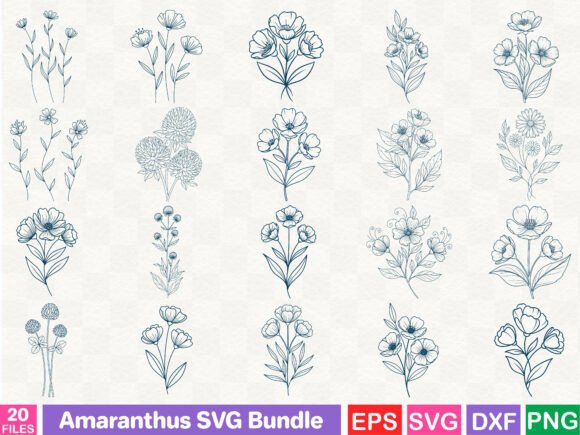
The Amaranthus design immediately strikes me as graceful and organic. The flowing, botanical theme isn’t overly rigid or geometric. This is a major plus for embroidery, where a softer, more natural layout often translates better into stitches than harsh, pixel-perfect lines. The detail level feels intentional—there’s visual interest without a chaotic density that could become a muddy, thread-heavy mess. The personality is gentle and classic, which tells me this bundle isn’t for a bold, statement piece, but rather for projects that carry a sense of understated elegance.
A Natural Fit for Specific Projects
Imagine pulling out a neutral linen tote bag for a custom order. You’re thinking about a gift for someone who appreciates nature-inspired details. The Amaranthus design comes to mind. Its organic shape would complement the fabric’s texture beautifully, and the theme feels universally appreciable—not tied to one specific season or event. This is the kind of design I’d lean toward for handmade products like pillow covers, kitchen towels, or apron accents. It also has strong potential for personalized gifts, like a baby blanket or nursery decor item, where a soft botanical theme adds warmth without being overly childish.
Performance in Real-Life Embroidery Situations
So, where would I actually put this to work? The versatility mentioned in the description suggests many applications, but from an embroidery designer’s perspective, I evaluate based on stitch clarity and product integrity.
For custom apparel like sweatshirts or t-shirts, this design’s flowing lines could work well, provided the garment has a stable, non-stretchy area (like a sweatshirt pocket or the back yoke). On a tote bag, it’s practically a perfect match—the canvas or cotton fabric provides a stable base, and the design elevates a simple bag into a boutique product. For baby clothes, I’d likely size it down and place it as a small accent on a sleeve or chest, avoiding overly dense areas.
Its use as an embroidered patch is intriguing. The organic shape could make for a unique, non-rectangular patch that stands out. However, this brings us to the crucial next point: where we need to be careful.
Points of Consideration Before Hooping Up
No design is universally perfect, and a thoughtful review means acknowledging where extra planning is required. The Amaranthus SVG Bundle’s graceful detail is a strength, but in very small hoop sizes, some of those finer elements might need simplification to maintain clarity. Stitching onto textured fabrics like a heavily knitted sweater could cause the softer lines to get lost, whereas a smooth cotton or linen would showcase them beautifully.
Working on dark fabric will require a conscious thread color selection to ensure the design doesn’t fade into the background. And because the theme is organic, applying it to curved surfaces like caps needs a test run—how will the flowing lines distort around the curve? The key is to never assume. Always test the design on scrap fabric first, matching the final project’s material and color.
Practical Notes for a Professional Finish
Here are the steps I take, and recommend, before committing this design to a client project or shop item:
- Check thread color contrast against your background fabric in both natural and artificial light.
- Review stitch density in your embroidery software. Are there areas that might become too thick and stiff, especially for wearables?
- Confirm your hoop size is appropriate for the scale you want. Does the design look crisp and intentional at that size?
- Inspect small details in the file. Are there tiny corners or lines that might not translate well to a running stitch or satin stitch?
- Test the design concept in black and white mockups to see if the composition holds up without color.
- Compare how it looks on both light and dark fabric backgrounds in your preview.
- Use the proper stabilizer for your chosen fabric to prevent puckering and maintain the design’s integrity.
Impact on Your Product’s Value and Appeal
Beyond the technical, how does this design affect the finished product? For a craft business or Etsy seller, using a cohesive, well-executed design like this boosts customer trust. It shows you’ve chosen assets with a clear visual personality, which enhances your brand consistency. A tote bag embroidered with this design feels thoughtful, not generic. That increases its giftability and perceived value.
For commercial embroidery projects or small shop merchandise, it offers a recognizable yet not overly common motif. This can help your products stand out in a crowded marketplace while still appealing to a broad audience. The professional finish you achieve by applying the design correctly directly influences buyer engagement—they’re more likely to connect with a product that looks intentionally crafted.
The Final, Crucial Step
All this practical judgment assumes one thing: you have the right to use the design for your purpose. Since the product description categorizes this as an Illustration and Graphics bundle, it is essential to confirm the licensing terms before selling any finished items or using it in digital product previews. Does it allow for personal and commercial projects? Always verify this with the seller or license documentation. It’s the foundation of any responsible, professional use.
In summary, the Amaranthus SVG Bundle presents itself as a versatile, organic-themed asset. Its real value for embroidery designers, however, lies in its suitability for projects that benefit from a soft, elegant touch—think home goods, personalized gifts, and boutique apparel. Its success hinges on mindful application: choosing the right fabric, scale, and thread, and always, always testing first. When handled with that care, it can translate from a digital file into a truly lovely finished product that resonates with makers and customers alike.