The Wildflower Border: A Designer’s Practical Review
When I download a new embroidery file, especially one titled Wildflower Border SVG, my first question isn’t about its potential—it’s about its reality. How will it translate from a digital graphic on my screen to threads on fabric? What mood will it actually stitch into a finished product? Let’s walk through that evaluation.
First Impression: A Light, Organic Flow
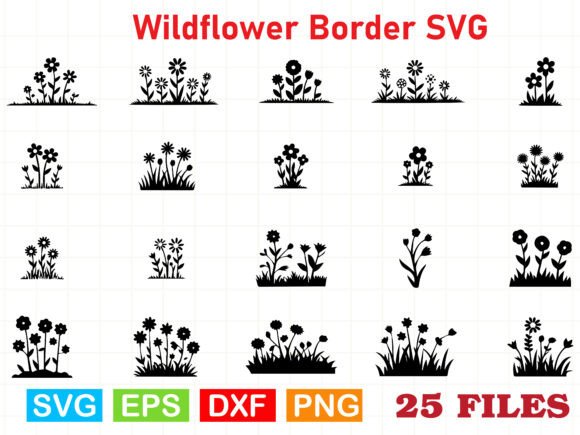
The immediate feeling of this design is one of gentle abundance. It’s a border, which implies structure, but the theme of wildflowers suggests a relaxed, organic flow. The layout isn’t rigidly symmetrical; it has a natural, meandering personality. This isn’t a formal, dense floral pattern. It’s illustrative, with a level of detail that feels friendly and approachable, perfect for projects that should feel handmade and personal, not mass-produced.
For an embroidery designer, this whispers “casual elegance.” It belongs on items where you want to add a touch of rustic charm without overwhelming the base product. Think of a linen pillow cover, a cotton apron, or the hem of a simple sundress. The Illustrations category is accurate—it’s a graphic with an artistic, drawn quality, not a hyper-realistic render.
The Real-Life Embroidery Scenario: A Custom Tote Bag
Let’s imagine a real project: a customer orders a custom embroidered tote bag for a friend’s birthday. They want something cheerful, unique, and timeless. I pull up the Wildflower Border SVG and consider it for the bag’s front pocket panel.
In this scenario, the design’s strengths become clear. The border format frames the space beautifully. The variety in the flower shapes would allow for playful thread color choices—maybe a pop of color for the larger blooms and softer tones for the filler flowers and leaves. On a sturdy canvas tote, the stitch density would need to be appropriate; too dense could make the fabric stiff, too light might not hold up to use. The illustrative style means that even with a simpler fill stitch approach, the design’s character would remain intact.
This is where practicality kicks in. How would it stitch out? I’d be watching the smaller elements closely. Tiny details in an embroidery file can become lost or blurry in actual stitching. I’d test it on scrap canvas first to see if the delicate stems and small petals retain their clarity. The joy of a wildflower border is in its lightness, and that must survive the translation from digital embroidery file to physical thread.
Where This Design Performs Brilliantly
This border design shines on projects that benefit from a gentle, decorative accent. It’s a fantastic choice for:
- Home Decor: Pillow covers, simple tea towels, or nursery blanket edges. It adds a handmade touch that elevates the item without shouting.
- Personalized Gifts: Embroidered on the cuff of a baby’s romper or along the border of a kitchen apron for a wedding gift. It feels special and crafted.
- Small Shop Merchandise: For an Etsy seller or boutique, this design on a high-quality sweatshirt or a linen cap creates a cohesive, brand consistent look. It’s recognisable and giftable.
- Commercial Embroidery Projects: As part of a craft business offering, it’s versatile. It could be adapted for an embroidered patch or used repeatedly on a line of custom apparel like t-shirts or lightweight jackets.
The visual appeal here directly impacts product value and customer trust. A clean, well-executed stitch-out of this design on a finished product communicates professionalism. It shows care in selection and execution, which engages buyers looking for authenticity.
Caution Areas: Where to Tread Carefully
Every design has its ideal applications and its tricky ones. For the Wildflower Border SVG, its illustrative nature requires some forethought.
On very small hoop sizes, the intricacies might become cramped. Stitching it onto a curved surface like a cap brim would demand careful digitizing adjustments to maintain the flow of the border. Textured fabrics or very stretchy fabric could distort the finer lines if not paired with the correct stabilizer.
Dark fabric presents a classic challenge. The design’s lightness might need a bold contrast in thread colors to stand out effectively. I always advise testing a design in both light and dark fabric background mockups before committing to a project.
For products that will undergo frequent washing—like baby clothes or kitchen towels—the stitch integrity of the smaller elements is paramount. A dense satin stitch in a tiny area might not wear as well as a simpler running stitch outline. This is a crucial check during the scrap fabric test.
Practical Notes for the Working Designer
Before I load this file for a client’s project or my own small shop product, my checklist is straightforward.
- Test on Scrap: Always. Use the same fabric and stabilizer you intend for the final product. Look for clarity in the smallest details.
- Evaluate Thread Contrast: Play with color combinations on your software. Does the design lose its definition with subtle shades? Does it gain vibrancy with bold ones?
- Consider Scale: The border might need resizing to fit your specific item—a tote bag versus a handkerchief. Ensure the resizing doesn’t create awkward gaps or overly dense stitch areas.
- Check the Foundations: Confirm the licensing terms for this Graphics product. Is it cleared for commercial use on finished items you sell? Also, verify the technical file specifications for your machine embroidery design process.
- Think Beyond the Stitch: This design, as described, is versatile. For a digital product seller, it could be superb for creating printable mockups to showcase other work. Its clean, illustrative style makes it a strong design asset for previews and branding.
The Final Stitch: A Design Built for Versatile Joy
In my judgment, the Wildflower Border SVG isn’t a flashy, trend-driven graphic. It’s a foundational, mood-setting design. Its value lies in its ability to adapt—to feel heartfelt on a personalized gift and professional on boutique merchandise. It asks the embroiderer to engage with it thoughtfully: to choose threads with care, to match it to a product that suits its gentle scale, and to respect its details through proper technique.
When stitched well, it delivers that promise from its description: it sparks joy. Not big, loud joy, but the quiet, lasting joy of a well-made, beautiful thing. That’s the kind of finished product that builds a reputation, satisfies a customer, and makes the craft feel worthwhile. For the designer, the small business owner, the maker—that’s the real project win.